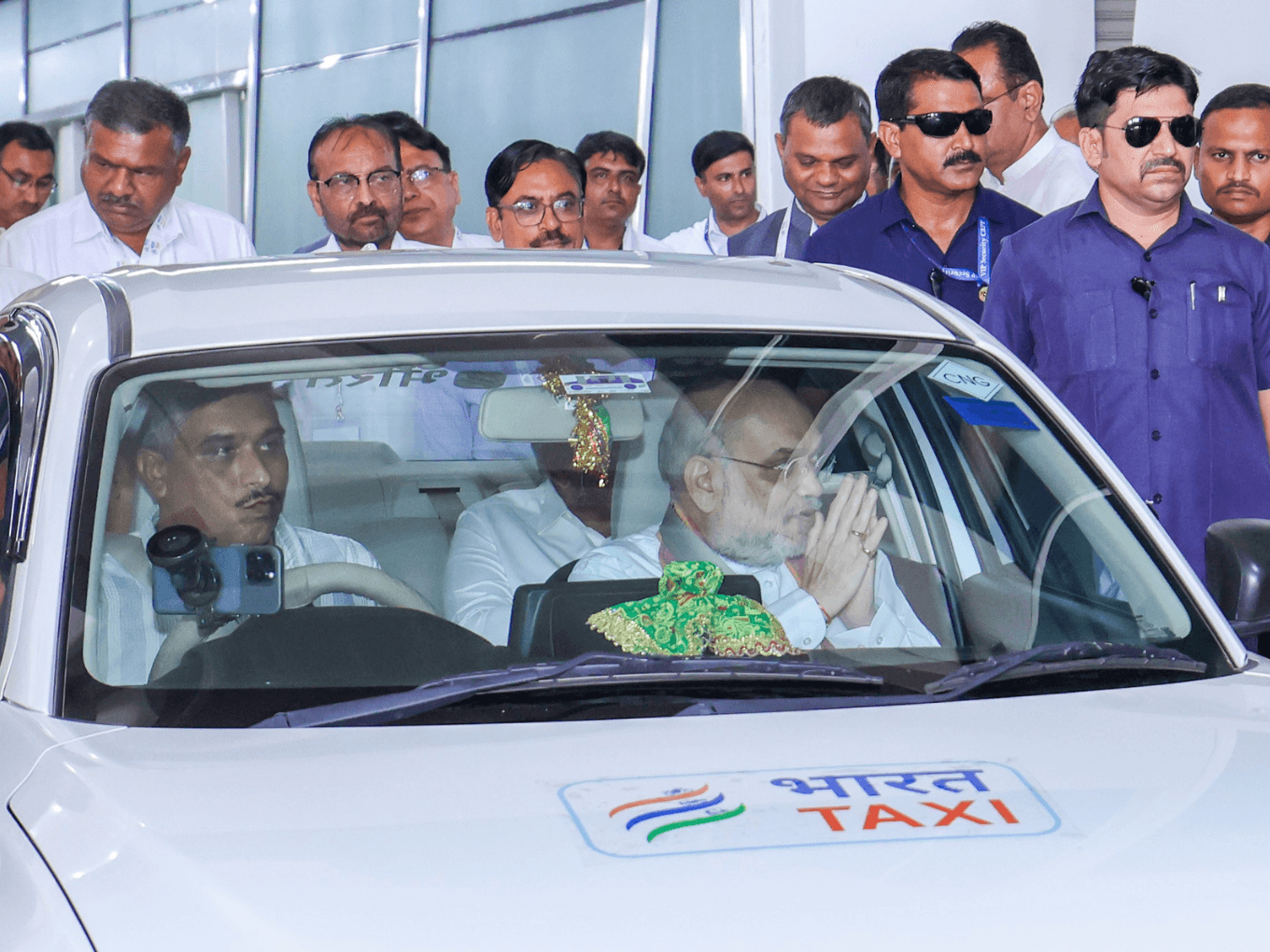
Government-backed cooperative ride-hailing platform Bharat Taxi plans to expand to more than 500 cities and towns across India within the…
Key Insights
10 editorial insights.
Bharat Taxi's plan to expand into over 500 cities signifies a robust ambition to tap into the rapidly growing ride-hailing market in India. This move not only reflects confidence in the cooperative model but also aims to provide affordable transportation options in underserved regions, potentially reshaping local economies.
Key players involved include Bharat Taxi, a government-backed initiative, which stands out in the ride-hailing sector dominated by giants like Uber and Ola. Their unique cooperative framework aims to empower local drivers and communities, making it a significant player in promoting equitable growth in the transportation sector.
This expansion is strategically important as it aligns with the government's push for inclusive economic growth and job creation. A successful rollout could establish Bharat Taxi as a leader in the cooperative model, potentially influencing other sectors to consider similar frameworks for growth and sustainability.
For end users, this development could lead to increased access to affordable transportation options, particularly in smaller towns that currently lack reliable ride-hailing services. Furthermore, it may enhance competition, forcing existing players to lower prices or improve service quality to retain market share.
This initiative connects to a larger trend of expanding digital services in tier-2 and tier-3 cities across India, where internet penetration and smartphone usage are rapidly increasing. Over the past 12-24 months, there has been a notable surge in demand for digital platforms catering to previously untapped demographics.
The Indian ride-hailing market is projected to grow at a CAGR of approximately 15% over the next five years, potentially reaching a market size of $20 billion by 2025. Bharat Taxi's expansion could capture a significant share of this market, especially in regions where traditional ride-hailing services are limited or non-existent.
However, this ambitious plan is not without risks. Challenges such as infrastructural limitations, regulatory hurdles, and the need for extensive driver training and recruitment could impede swift execution, raising questions about the feasibility of scaling operations quickly across diverse geographies.
Competitors like Ola and Uber are likely to respond aggressively to Bharat Taxi's expansion by enhancing their service offerings, introducing localized features, or ramping up marketing efforts to retain their user base. Additionally, they may explore partnerships with local drivers to maintain competitive pricing.
In the next 6-12 months, it will be essential to monitor regulatory developments regarding ride-hailing operations in India, especially concerning safety standards and driver licensing. Furthermore, the government’s stance on subsidies for cooperative models could significantly influence Bharat Taxi's operational strategy.
Ultimately, this initiative represents a critical moment for technology professionals and investors, highlighting the potential of cooperative models in tech-driven markets. Success in this venture could attract further investments in similar platforms, signaling a shift towards more community-focused business strategies in the tech landscape.
Bharat Taxi, the government-backed cooperative ride-hailing service, has announced plans to expand its operations to over 500 cities and towns in India within the next two years. This ambitious move comes at a time when the demand for reliable and affordable transportation solutions is surging across the country, reflecting a strategic push for greater accessibility in the ride-hailing market.
The technical implementation of Bharat Taxi's expansion will leverage a scalable platform engineered to handle increased user demand across diverse geographic locations. This includes investment in cloud-based infrastructure to support real-time data analytics and machine learning algorithms for efficient ride allocation. The platform will also integrate GPS technology for precise tracking and routing, enhancing user experience and operational efficiency.
In the broader context, the ride-hailing industry in India is experiencing rapid growth, spurred by increased smartphone penetration and a younger demographic seeking convenient transport options. Competitors like Ola and Uber dominate the urban landscape, but Bharat Taxi's cooperative model aims to carve out a niche, particularly in underserved markets. With the Indian ride-hailing market projected to grow significantly, Bharat Taxi's expansion could reshape competitive dynamics.
This expansion is set to have a significant impact on the Indian tech ecosystem. Local developers will have opportunities to contribute to the platform's growth through software solutions and enhancements. Furthermore, the initiative could benefit regional transportation services and small businesses, creating jobs and stimulating local economies as Bharat Taxi integrates into various urban and rural landscapes.
Key Highlights
- Bharat Taxi announces expansion to over 500 cities in India.
- Plans to use cloud tech and machine learning for ride efficiency.
- Indian ride-hailing market projected to grow by 20% annually.
- Local drivers and small businesses stand to gain significantly.
- Expansion timeline set for the next two years.
Real-World Impact
The immediate effects of Bharat Taxi's expansion will be felt across various sectors, including transportation, software development, and local economies. Job roles for drivers are expected to increase, while tech professionals may find opportunities in support and development roles. Local businesses could also see a boost as the service integrates into their communities, offering new avenues for customer engagement.
Why This Matters
This expansion represents a significant shift towards a more inclusive transportation model in India, emphasizing cooperative business practices. For CTOs and developers, this means adapting to an evolving technological landscape where collaboration and community-driven services are becoming increasingly vital. They should consider how to integrate such principles into their own projects.
As Bharat Taxi rolls out its services across more cities, all eyes will be on its ability to effectively compete with established players while maintaining its cooperative ethos. Monitoring user feedback and operational efficiency will be crucial in determining the platform's long-term viability.
Found this useful? Share it!