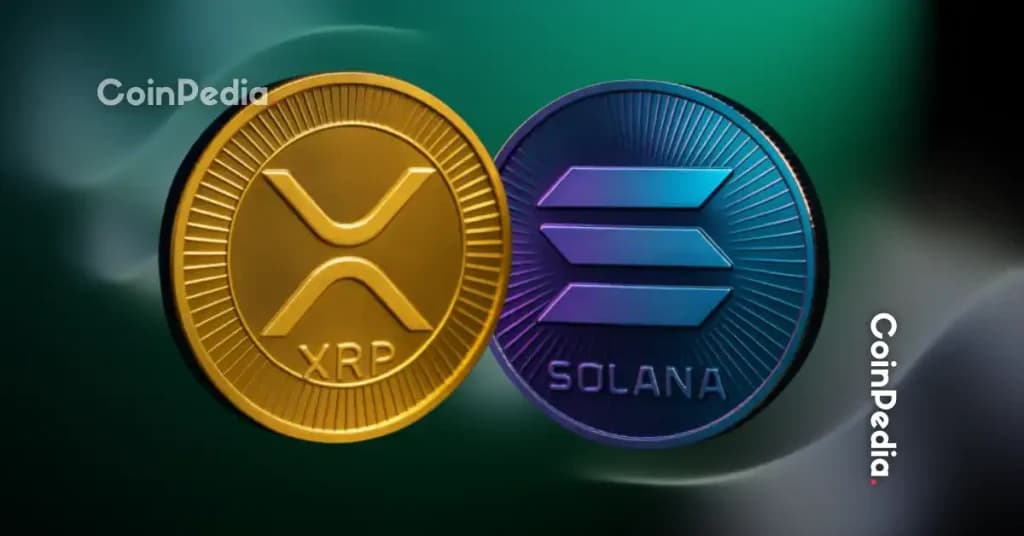
The post Can Solana Flip XRP? Detail Analysis appeared first on Coinpedia Fintech News The race between Solana and XRP has been going on for a long time. Today, XRP ranks sixth with a market cap of $69.12 billion, while Solana follows in seventh with $47.42 billion.This trail has left investors wond
⚠️ Disclaimer: Cryptocurrency content on AiFeed24 is for informational purposes only and does not constitute financial or investment advice. Crypto investments are highly volatile and risky. Always consult a qualified financial advisor before making investment decisions.
Key Insights
10 editorial insights.
The ongoing competition between Solana and XRP has intensified as Solana's market cap of $47.42 billion inches closer to XRP's $69.12 billion. This close proximity signals a potential shift in investor sentiment and market dynamics within the cryptocurrency sector, which may push Solana to adopt more aggressive growth strategies to surpass XRP.
Key players in this scenario include the Solana Foundation and Ripple, the company behind XRP. Ripple's ongoing legal battles with the SEC have created uncertainty around XRP's future, while Solana's proactive development community has positioned it favorably for innovation and adoption, making these entities crucial to the evolving landscape of cryptocurrency.
This development underscores a larger strategic importance within the cryptocurrency industry, as it highlights the increasing demand for fast and scalable blockchain solutions. As decentralized finance (DeFi) and non-fungible tokens (NFTs) continue to gain traction, platforms like Solana that offer high throughput and low transaction costs could redefine user experiences and expectations.
For developers and end users, the potential surpassing of XRP by Solana could lead to increased investment in Solana-based projects and applications. As developers flock to platforms with higher growth potential, users may benefit from improved transaction speeds and lower fees, enhancing the overall usability of cryptocurrency for everyday transactions.
Over the past 12-24 months, there has been a noticeable trend towards layer-1 blockchains that offer scalability and efficiency, with Solana being a prime example. As the overall blockchain market continues to grow, estimated to reach approximately $23.3 billion by 2028, the performance of these networks will play a critical role in determining their market positions.
Currently, the cryptocurrency market is characterized by volatility, with Bitcoin's dominance declining to around 40% as investors diversify into altcoins. The proximity of Solana to XRP may drive speculative trading, potentially impacting both coins' price stability as market participants grapple with rapid fluctuations in value.
One primary risk for Solana is its relatively nascent standing compared to the established presence of XRP, which has been in the market longer and has a more significant institutional backing. Additionally, the possibility of regulatory challenges similar to those faced by Ripple presents an unresolved question for Solana's future growth trajectory.
Competitors such as Cardano and Polygon are likely to respond to Solana's ascent by emphasizing their own unique value propositions, such as sustainability and interoperability. This could lead to an intensified competition for developer talent and market share, as each platform seeks to capture the growing DeFi and NFT sectors.
In the next 6-12 months, key milestones to monitor include regulatory outcomes for Ripple's ongoing legal issues and potential technological advancements from both Solana and XRP. These developments will not only influence investor sentiment but also set the stage for the future direction of these blockchain networks.
For technology professionals and investors, the competition between Solana and XRP serves as a crucial indicator of the evolving blockchain landscape. As market dynamics shift, understanding these trends will be essential for strategic investment decisions and for identifying promising technologies that align with future market demands.
As Solana continues to gain traction in the cryptocurrency market, the question arises: can it overtake XRP? Currently, XRP holds the sixth position with a market cap of $69.12 billion, while Solana trails closely at seventh with $47.42 billion. This competition is crucial as both cryptocurrencies strive for wider adoption and utility.
Solana operates on a unique consensus mechanism known as Proof of History (PoH), which enhances transaction speeds and throughput compared to traditional blockchain systems. This allows Solana to process thousands of transactions per second with low fees, making it appealing for decentralized applications (dApps) and DeFi projects. In contrast, XRP utilizes a consensus protocol that is designed for fast cross-border payments, primarily focusing on banking and financial institutions.
The broader cryptocurrency landscape is increasingly competitive, with Ethereum and Binance Smart Chain leading in dApp deployment. As of now, the total market capitalization of cryptocurrencies is nearing $2.5 trillion, indicating robust investor interest. Both Solana and XRP are making strides to capture market share, but they cater to different use cases—XRP in finance and Solana in decentralized ecosystems.
In India, the interest in cryptocurrencies has surged, especially following the government’s move towards clearer regulations. Indian developers are actively building on Solana, attracted by its lower transaction costs and high speed. Companies like Polygon are already collaborating with Solana to integrate solutions that cater to the burgeoning Indian market, which could significantly influence the growth trajectory of both cryptocurrencies.
Key Highlights
- Solana's transaction speed exceeds 65,000 transactions per second.
- XRP's use case focuses on instant cross-border payments, appealing to banks.
- Market capitalization gap narrowed from $30 billion to $21.7 billion within three months.
- Developers leveraging Solana's ecosystem stand to gain from lower operational costs.
- Watch for Solana's upcoming upgrade, which promises to enhance scalability further.
Real-World Impact
Immediate effects of this rivalry will influence roles in blockchain development and investment strategy. Developers focusing on high-performance applications might pivot towards Solana, while financial institutions may continue to explore XRP for remittances. Additionally, Indian fintech startups may seek partnerships with these platforms to enhance their service offerings.
Why This Matters
This competition signifies a shift toward greater specialization within the crypto space. As different cryptocurrencies carve out their niches, CTOs and developers should assess which platforms align with their strategic goals. Understanding the unique capabilities of each blockchain can inform development choices and investment strategies.
As Solana and XRP continue to vie for dominance, which will ultimately prevail is uncertain. Observers should keep an eye on Solana's scalability improvements and XRP's regulatory challenges. These factors will shape the future landscape of cryptocurrency.
Found this useful? Share it!