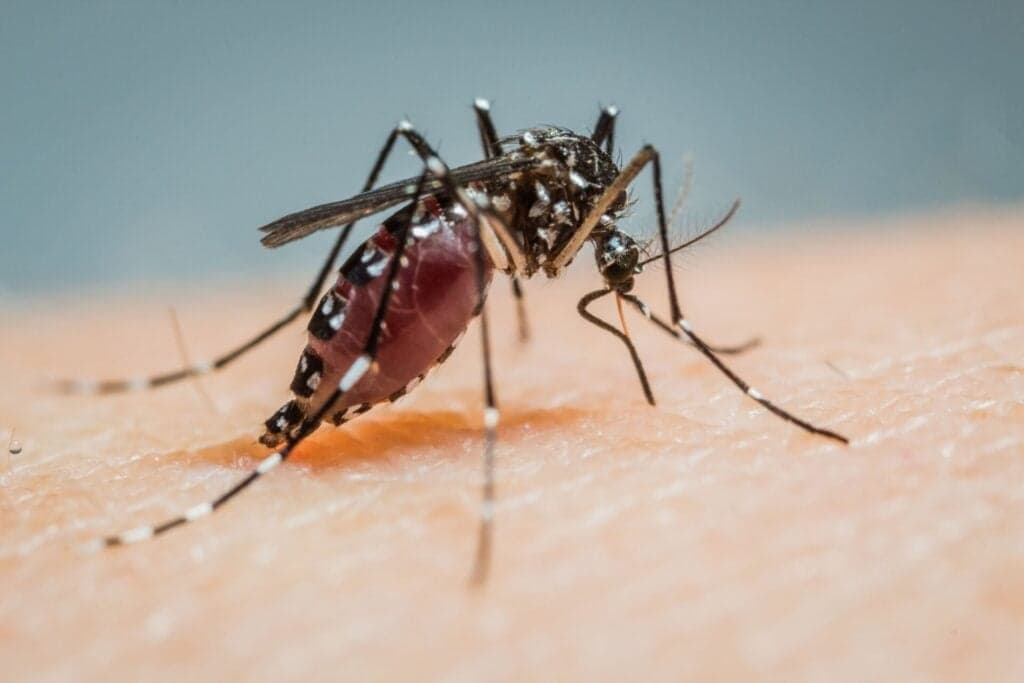
Wolbachia bacteria could offer an environmentally-friendly way of controlling mosquitoes and the many diseases they spread.
Key Insights
10 editorial insights.
The release of 600,000 Wolbachia-infected mosquitoes in Washington D.C. represents a pivotal moment for sustainable pest control strategies, aligning with growing global concerns about environmental safety and public health. This approach not only reduces the reliance on chemical insecticides but also minimizes harm to non-target species, highlighting the potential for biological interventions in disease management. The implications of this strategy are far-reaching, with significant applications in urban areas worldwide.
The use of Wolbachia bacteria to disrupt mosquito reproduction is a natural biological mechanism that has garnered significant attention in recent years. Companies like Oxitec and Verily are also exploring genetic modification and biological control methods to tackle mosquito populations, underscoring the potential for innovative solutions in this space. As urban areas face increasing pressure from mosquito-borne illnesses, the global market for mosquito control is projected to grow significantly.
The estimated value of the global mosquito control market is expected to exceed $5 billion by 2025, driven by the growing demand for sustainable pest management strategies. Regulatory bodies are increasingly open to innovative solutions, reflecting shifts in public health policies towards more eco-friendly approaches. This trend is likely to drive further investment in biological control methods and genetic modification technologies.
In India, where mosquito-borne diseases like malaria and dengue are prevalent, the application of Wolbachia-infected mosquitoes has shown promising results. The success of this approach in India and other regions highlights the potential for biological interventions in disease management, particularly in areas where chemical insecticides have proven ineffective. As the global market for mosquito control continues to grow, India is likely to play a significant role in shaping the trajectory of this industry.
The release of Wolbachia-infected mosquitoes in Washington D.C. marks a significant departure from traditional chemical pesticide-based approaches to disease management. This shift towards biological control methods is driven by growing concerns about environmental safety and public health, as well as the limitations of chemical insecticides in addressing the root causes of mosquito-borne illnesses. As the global community continues to grapple with the challenges of disease management, innovative solutions like Wolbachia-infected mosquitoes are likely to play a key role.
The use of Wolbachia bacteria to disrupt mosquito reproduction has significant implications for the long-term management of mosquito-borne diseases. By reducing the number of disease-carrying mosquitoes, this approach can help to mitigate the spread of illnesses like Zika and dengue, which have significant economic and social impacts. As the global community continues to address the challenges of disease management, the potential of Wolbachia-infected mosquitoes should not be overlooked.
In addition to reducing disease transmission, the use of Wolbachia-infected mosquitoes can also help to mitigate the development of pesticide-resistant mosquito populations. This is a critical concern in areas where chemical insecticides have been widely used, as the emergence of pesticide-resistant mosquitoes can significantly limit the effectiveness of disease management strategies. By leveraging natural biological mechanisms, Wolbachia-infected mosquitoes offer a promising solution to this challenge.
The release of Wolbachia-infected mosquitoes in Washington D.C. is part of a broader trend towards sustainable pest control strategies, driven by growing concerns about environmental safety and public health. This trend is likely to drive further investment in biological control methods and genetic modification technologies, as companies and regulatory bodies seek to develop more effective and eco-friendly approaches to disease management. As the global community continues to address the challenges of disease management, the potential of sustainable pest control strategies should not be overlooked.
In the context of urbanization and climate change, the need for effective disease management strategies has never been more pressing. The use of Wolbachia-infected mosquitoes offers a promising solution to this challenge, by leveraging natural biological mechanisms to reduce disease transmission and mitigate the spread of mosquito-borne illnesses. As the global community continues to grapple with the challenges of disease management, the potential of Wolbachia-infected mosquitoes should be explored in greater depth.
The success of Wolbachia-infected mosquitoes in reducing disease transmission is likely to have significant implications for the development of new disease management strategies. By leveraging natural biological mechanisms, this approach can help to mitigate the spread of illnesses like Zika and dengue, which have significant economic and social impacts. As the global community continues to address the challenges of disease management, the potential of Wolbachia-infected mosquitoes should be considered in conjunction with other innovative solutions.
This summer, Washington D.C. will witness an unprecedented biological intervention—600,000 mosquitoes infected with Wolbachia bacteria will be released to combat mosquito-borne diseases. This innovative approach is significant as it presents a sustainable alternative to traditional chemical pesticides, aligning with growing global concerns about environmental safety and public health.
The technique involves infecting mosquitoes with Wolbachia, a naturally occurring bacterium that interferes with the reproduction of disease-carrying species. When these modified mosquitoes mate with wild populations, the resulting offspring either do not survive or are unable to transmit viruses such as Zika and dengue. This approach leverages a natural biological mechanism to reduce disease transmission, significantly minimizing reliance on chemical insecticides that can harm ecosystems and non-target species.
In the broader context, companies like Oxitec and Verily are also exploring genetic modification and biological control methods to tackle mosquito populations. As urban areas face increasing pressure from mosquito-borne illnesses, the global market for mosquito control is projected to grow significantly, with an estimated value exceeding $5 billion by 2025. Regulatory bodies are increasingly open to innovative solutions, reflecting shifts in public health policies towards more sustainable pest management strategies.
In India, where mosquito-borne diseases like malaria and dengue are prevalent, the implications of this technology could be transformative. Indian biotech firms and research institutions are already engaged in similar initiatives, such as the use of Wolbachia in Aedes aegypti mosquitoes. This could foster collaboration with international entities, enhancing research capabilities and potentially leading to localized solutions tailored to India's unique challenges in public health.
Key Highlights
- Washington D.C. will release 600,000 modified mosquitoes this summer
- Wolbachia-infected mosquitoes reduce disease transmission effectively
- Global mosquito control market projected to exceed $5 billion by 2025
- Urban populations benefit most from reduced disease outbreaks
- Expect results from the D.C. release to inform future interventions
Real-World Impact
The immediate rollout of Wolbachia-infected mosquitoes in D.C. is expected to impact public health officials, environmental scientists, and urban planners. These groups will need to adapt to new methods of disease management, focusing on integrated pest management strategies that prioritize sustainability and efficacy.
Why This Matters
This initiative signifies a shift towards biological control methods in public health, reducing reliance on harmful chemical pesticides. CTOs and developers in the biotech sector should explore partnerships and innovations in genetic engineering, particularly in fields that intersect with environmental sustainability and public health.
Looking ahead, the outcomes of D.C.'s mosquito release will be closely monitored for their effectiveness. The potential for scaling this technology in other urban areas, especially in regions with high disease prevalence, represents a significant opportunity for the biotech sector.
Found this useful? Share it!