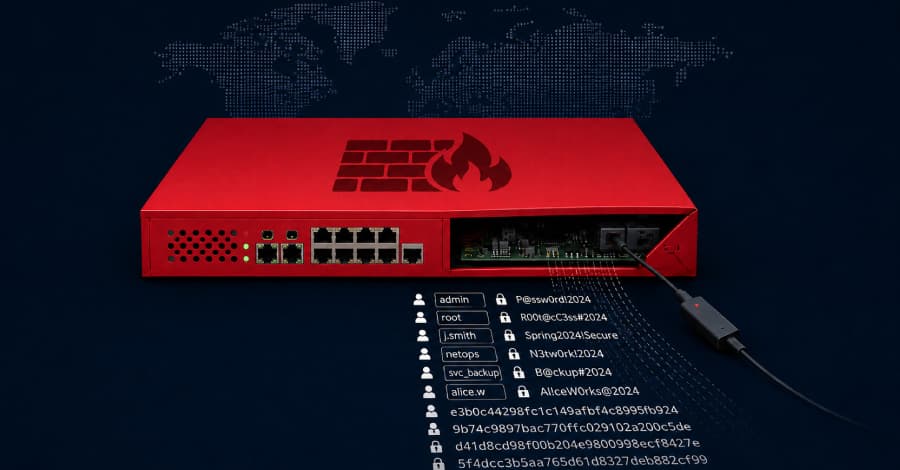
A Russian-speaking initial access broker (IAB) driven by financial gain is assessed to be behind a large-scale credential-harvesting operation known as FortiBleed that has targeted over 430,000 FortiGate firewalls globally. The campaign, active since February 2026, involves collecting credential lis
Key Insights
10 editorial insights.
The FortiBleed breach has exposed over 110 million sensitive credentials from FortiGate firewalls, highlighting a critical vulnerability in cybersecurity infrastructure. This incident not only raises immediate concerns about the security posture of affected organizations but also reflects the increasing sophistication of cybercriminal operations focused on exploiting widely-used network security devices.
Fortinet, the company behind FortiGate firewalls, is at the center of this breach, significantly impacting its reputation and customer trust. The involvement of a Russian-speaking initial access broker indicates organized crime's growing role in cybersecurity threats, suggesting that companies must bolster their defenses against calculated attacks from well-resourced adversaries.
This breach serves as a wake-up call for the cybersecurity industry, emphasizing the need for enhanced security measures and proactive threat detection strategies. As organizations increasingly rely on network security appliances, the exposure of such a large number of credentials could lead to more aggressive cyberattacks, reshaping how businesses approach cybersecurity investment and strategy.
With over 430,000 FortiGate firewalls potentially compromised, businesses relying on these devices face significant operational risks and potential financial repercussions. Companies may incur costs related to incident response, system upgrades, and reputational damage, which could lead to decreased customer confidence and business continuity challenges.
The FortiBleed incident fits into a broader trend of increasing credential theft and cyberattacks targeting enterprise-level hardware. Over the past year, there has been a significant rise in attacks exploiting network vulnerabilities, underscoring the need for businesses to prioritize cybersecurity as a critical component of their operational infrastructure.
The global cybersecurity market, valued at approximately $300 billion in 2023, is projected to grow significantly as organizations invest in more robust security measures. Breaches like FortiBleed can accelerate this growth, as businesses seek to protect themselves from similar threats, potentially increasing spending on firewall solutions and managed security services.
This breach raises several unresolved questions regarding the effectiveness of current security protocols in safeguarding high-value infrastructure. Organizations must confront the challenge of ensuring that their cybersecurity measures are not only compliant but also resilient against evolving threats posed by sophisticated attackers like IABs.
Competitors in the cybersecurity space, such as Palo Alto Networks and Cisco, may respond by enhancing their product offerings and emphasizing their security features to capture market share from Fortinet. This incident could also lead to increased collaboration among security vendors to develop standardized frameworks for better threat intelligence sharing.
In the next 6-12 months, it will be crucial to monitor regulatory developments surrounding cybersecurity practices, especially as governments consider stricter compliance measures for organizations handling sensitive data. Additionally, the effectiveness of Fortinet's response and recovery strategies will be key indicators of how the industry addresses such high-profile breaches.
For technology professionals and investors, the FortiBleed breach underscores the importance of investing in robust cybersecurity frameworks and the potential financial implications of neglecting such security measures. As vulnerabilities continue to emerge, the demand for innovative security solutions will likely drive investment and development within the tech sector, making cybersecurity a pivotal area for future growth.
A widespread credential-harvesting operation dubbed FortiBleed has emerged, impacting over 430,000 FortiGate firewalls worldwide. This campaign, believed to be orchestrated by a Russian-speaking initial access broker (IAB), underscores the alarming vulnerability of critical cybersecurity infrastructure. As the operation continues to evolve, its implications for organizations and cybersecurity practices are profound and immediate.
FortiBleed operates by exploiting vulnerabilities in FortiGate firewalls, leveraging advanced techniques to harvest credentials from these devices. The attackers utilize a range of phishing schemes, malware, and social engineering tactics to gain initial access. Once infiltrated, they extract sensitive information, including usernames and passwords, which can lead to further breaches across interconnected networks. This operation has been active since February 2026, showcasing a sophisticated understanding of firewall architecture and user behavior.
The broader cybersecurity landscape reveals an uptick in targeted attacks against firewall solutions, driven by the lucrative nature of credential theft. With the rise of remote work and cloud adoption, firewalls have become essential in protecting organizational perimeters. Competitors in the security market are ramping up their defenses, with many investing heavily in AI-driven threat detection systems. According to recent market data, the global cybersecurity market is expected to surpass $300 billion by 2026, indicating a growing recognition of the need for robust security measures.
In India, where digital transformation is accelerating, the implications of FortiBleed are particularly concerning. Indian companies, especially in sectors like finance and IT, are heavily reliant on firewall solutions to secure sensitive data. A breach in these systems could have dire consequences, leading to financial losses and reputational damage. Furthermore, with the increasing sophistication of cyber threats, Indian developers and security teams are urged to enhance their skills in threat detection and incident response to mitigate risks associated with such attacks.
Key Highlights
- FortiBleed has compromised over 430,000 firewalls globally.
- The operation exploits vulnerabilities in FortiGate firewalls, indicating advanced hacking techniques.
- The cybersecurity market is projected to exceed $300 billion by 2026, reflecting rising threats.
- Organizations with strong cybersecurity measures will benefit by minimizing risk exposure.
- Expect increased investment in firewall security and threat intelligence solutions in the coming months.
Real-World Impact
The immediate effects of FortiBleed are being felt across various industries, particularly in finance and technology sectors. IT administrators, security analysts, and compliance officers are now facing heightened pressure to secure firewall configurations and monitor for unusual activity. This operation serves as a wake-up call, prompting organizations to reassess their cybersecurity strategies and invest in advanced threat detection capabilities.
Why This Matters
FortiBleed signals a critical shift in the cyber threat landscape, emphasizing the need for enhanced vigilance in firewall security. CTOs and developers should prioritize regular audits and updates of firewall configurations, as well as employee training to recognize phishing attempts. This incident reveals the necessity for a proactive approach to cybersecurity, moving beyond reactive measures to incorporate real-time monitoring and response strategies.
As the FortiBleed operation continues to unfold, organizations must remain alert and agile in their cybersecurity efforts. One key area to watch is the development of new security protocols and the adoption of AI-driven solutions to counteract such sophisticated attacks.
Found this useful? Share it!