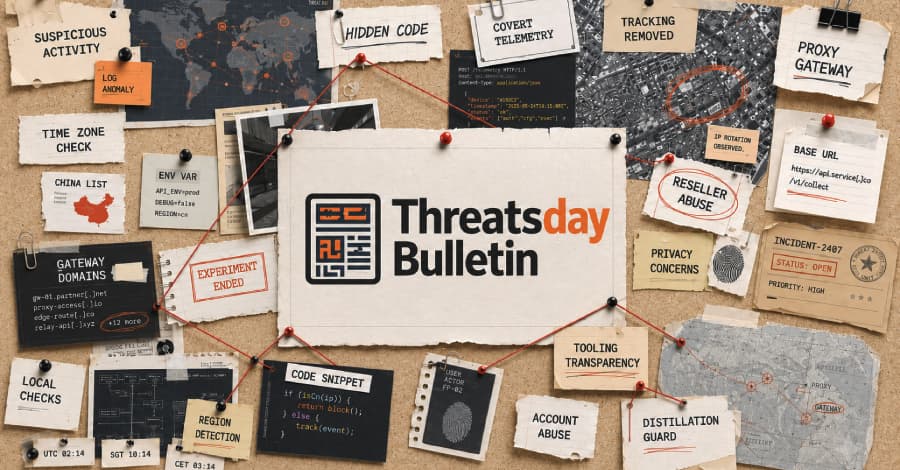
This week’s security news is mostly about weak spots. Browsers, bots, sandboxes, AI systems, and email flows all show the same problem in different ways. Everything looks normal until someone tests a small gap and finds a way through. This is not one big break. It is small permissions, weak checks,
Key Insights
10 editorial insights.
The recent discovery of vulnerabilities in AI systems, particularly related to compute capabilities, highlights significant security gaps that could be exploited by malicious actors. This poses immediate risks, as AI applications become more integrated into critical business functions, creating potentially devastating consequences if exploited.
Key players like Microsoft and Google, who are heavily investing in AI technologies, are at the forefront of addressing these vulnerabilities. Their response will set benchmarks for security protocols in AI development, influencing how other companies approach AI safety and compliance.
This situation underscores a strategic shift in the industry where security is becoming a paramount concern as AI adoption accelerates. The emergence of weak points in AI systems signals an urgent need for enhanced security measures and best practices, particularly as these technologies become ubiquitous in enterprise environments.
For businesses, the implications are significant: companies relying on AI-driven solutions may face operational disruptions or data breaches that could lead to financial losses. Additionally, the need for increased security investments could impact budgets, diverting resources away from innovation toward risk mitigation.
This development aligns with a broader tech trend of increasing vulnerabilities being exposed in complex systems over the past two years. The rise in sophisticated cyberattacks has forced organizations to reevaluate their security frameworks, especially as more systems integrate AI and automation.
The AI security market is projected to grow significantly, reaching approximately $42 billion by 2026, according to industry reports. This growth will likely be driven by an increasing demand for secure AI applications and compliance with emerging regulations regarding data protection and cybersecurity.
The primary risk here is the potential for a significant breach resulting from these vulnerabilities, which could undermine trust in AI applications. Moreover, organizations may struggle with how to effectively patch these weaknesses in real-time, raising questions about the adequacy of existing security measures.
Competitors such as IBM and Amazon Web Services may respond by enhancing their own AI security offerings or investing in partnerships with cybersecurity firms. This could lead to a race to establish industry standards for AI security, shaping market dynamics in favor of those with robust security protocols.
In the next 6-12 months, watch for regulatory developments concerning AI and cybersecurity, particularly as governmental bodies worldwide begin to establish frameworks for AI accountability. Compliance with these regulations will be essential for companies aiming to mitigate risks associated with their AI deployments.
The ultimate significance of these developments for technology professionals and investors lies in the urgent need to prioritize security in AI investments. A failure to address these vulnerabilities could lead to substantial losses and diminished trust in AI technologies, impacting long-term market viability.
Recent findings reveal alarming vulnerabilities across India's digital landscape, affecting essential technologies like browsers, AI systems, and email flows. These risks are especially concerning as they expose critical gaps in security checks that could be exploited by cybercriminals, emphasizing the urgent need for enhanced protective measures in the face of rising digital threats.
Security professionals have discovered 15 significant vulnerabilities that highlight a pattern of weak permissions and inadequate validation processes across various platforms. Many of these weaknesses are rooted in the underlying technologies that power modern applications. For instance, flaws in browser security can be traced back to JavaScript execution contexts, while AI systems may falter in their model training protocols, leaving them susceptible to adversarial attacks. Understanding these technical specifics is crucial for developers aiming to fortify their applications against exploitation.
The broader industry context reveals a worrying trend where many organizations, despite investing heavily in cybersecurity, still face persistent threats from increasingly sophisticated cyber actors. Competitors in the tech space are adapting to these challenges by implementing more robust security frameworks and enhancing user awareness. According to recent reports, cybersecurity spending in Asia is projected to exceed $40 billion by 2025, highlighting the urgency of these security concerns in a rapidly evolving digital ecosystem.
In India, the implications of these vulnerabilities resonate across various sectors, impacting startups, fintech companies, and established tech giants alike. Indian developers are at the forefront of addressing these issues, as they work to integrate stronger security measures into their applications. Industries reliant on digital transactions, such as e-commerce and banking, are particularly vulnerable, necessitating immediate action to safeguard user data and maintain trust.
Key Highlights
- Identified 15 vulnerabilities that could be exploited by attackers
- Weak permissions and checks across multiple platforms detailed
- Cybersecurity spending in Asia to surpass $40 billion by 2025
- Startups and fintech companies will benefit most by enhancing security
- Expect increased regulatory scrutiny and compliance demands in the coming months
Real-World Impact
Immediate repercussions of these vulnerabilities will be felt across various job roles, particularly in cybersecurity and software development. Security analysts will be tasked with identifying and mitigating risks, while developers will need to integrate stronger security protocols into their workflow. Industries like e-commerce and banking, that heavily rely on digital infrastructure, will also need to reassess their security frameworks to protect against potential breaches.
Why This Matters
This situation underscores a larger shift towards recognizing cybersecurity as a fundamental aspect of digital transformation. As attacks become more sophisticated, CTOs and developers must prioritize security from the ground up, adopting a proactive rather than reactive approach. This includes continuous training and awareness programs for employees, as well as investing in advanced security technologies.
Looking ahead, the most critical development to monitor will be the enforcement of stricter regulations surrounding data protection and cybersecurity practices in India. This could lead to significant industry changes, compelling businesses to prioritize security in their digital strategies.
Found this useful? Share it!