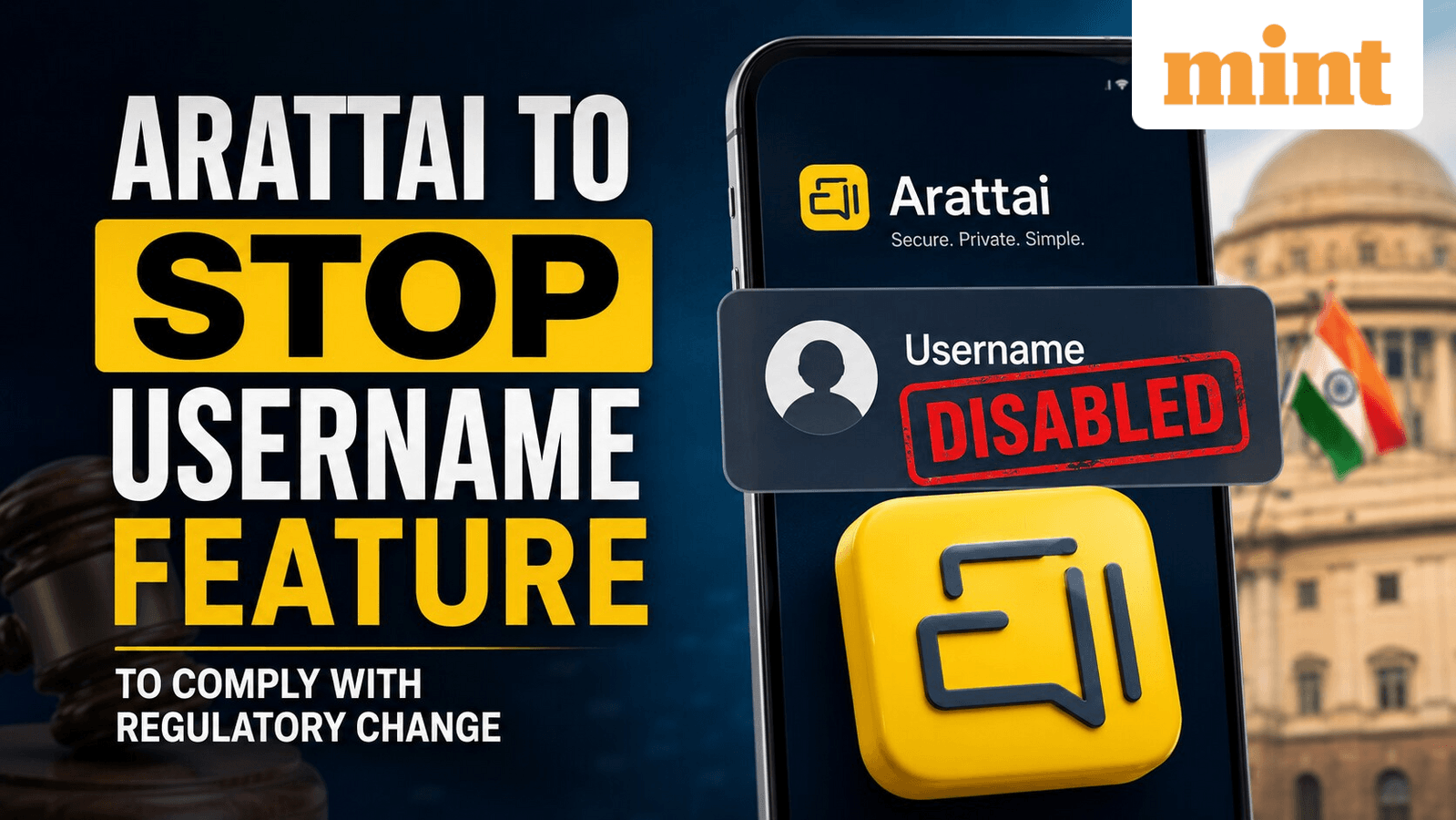
Zoho's Arattai will remove its username-based account feature after the regulatory challenges faced by WhatsApp.
Key Insights
10 editorial insights.
Zoho's decision to suspend the username feature on Arattai reflects the growing tension between innovation and regulatory compliance. In India, the government's increasing scrutiny of digital platforms, particularly regarding user privacy, is reshaping how tech companies approach product features, forcing them to prioritize legal considerations over user experience.
The suspension of the username feature places Arattai in a challenging position within a competitive messaging landscape dominated by platforms like WhatsApp and Telegram. As user privacy becomes a focal point, messaging apps that can navigate regulatory challenges while offering secure and anonymous communication may attract users disillusioned by mainstream options.
This incident highlights a critical pivot in the Indian tech industry, where startups must balance innovation with regulatory adherence. As evidenced by WhatsApp's ongoing challenges regarding data sharing, companies that prioritize compliance are likely to foster greater trust among users, which is essential for long-term growth in the digital communication sector.
Arattai's initial implementation of a username feature aimed to provide an alternative to traditional phone number-based communication, but the backlash underscores the delicate nature of privacy in digital platforms. This scenario illustrates how quickly user expectations can shift, compelling companies to adapt their offerings to align with public sentiment regarding privacy and security.
The regulatory environment in India is becoming increasingly complex, impacting not only messaging platforms but also sectors like e-commerce and fintech. As these industries rely heavily on secure communication, they must navigate similar challenges as Zoho, ensuring their innovations do not attract regulatory scrutiny that could hinder operations.
This development may catalyze a shift in user preferences towards privacy-centric platforms like Signal and Telegram. As users become more aware of the implications of data privacy, companies that prioritize robust security measures and transparency in their communication strategies are likely to see accelerated adoption among privacy-conscious consumers.
The withdrawal of Arattai's username feature reflects a broader industry trend where tech companies are reevaluating their features in light of regulatory pressures. This situation may lead to a temporary slowdown in innovation within the messaging space as companies prioritize compliance over introducing new functionalities that could raise alarms.
Zoho's choice to suspend the username feature also serves as a cautionary tale for other tech companies operating in India. Observing the fallout from this decision may prompt other startups to preemptively adjust their product offerings to avoid similar regulatory complications, potentially stifling creativity and innovation in the market.
The suspension could also impact user acquisition for Arattai, as potential users might perceive the platform as less innovative than competitors that offer similar privacy features. This perception could discourage tech-savvy users who prioritize anonymity in their digital interactions, potentially affecting Arattai's growth trajectory in a crowded field.
Overall, Zoho's actions regarding Arattai's username feature underscore the necessity for tech companies to adopt a proactive approach to regulatory compliance. By aligning product development with legal frameworks, firms can better navigate the complexities of the Indian market while maintaining user trust and fostering a culture of innovation.
In a significant move, Zoho's messaging platform, Arattai, has announced the suspension of its WhatsApp-style username feature following regulatory scrutiny faced by WhatsApp. This decision highlights the ongoing tension between innovation in digital communication and compliance with governmental regulations, especially in the Indian market, where privacy concerns are paramount.
Arattai's username feature was designed to allow users to communicate without revealing their phone numbers, similar to WhatsApp's approach. However, this functionality raised alarms about privacy and data security, prompting Zoho to reconsider its implementation. The underlying technology utilized secure peer-to-peer connections, but the regulatory landscape made it troublesome, leading to this strategic withdrawal.
This incident is emblematic of a broader trend within the tech industry, where companies are increasingly navigating complex regulatory frameworks. WhatsApp itself has faced challenges, including scrutiny over its data-sharing policies. As competition heats up, platforms like Telegram and Signal, which emphasize privacy, may gain traction as users seek alternatives that align better with their concerns.
Within India's rapidly evolving tech ecosystem, the impact of this change is profound. Indian startups and developers are continuously innovating, yet they must remain vigilant about compliance. Companies in sectors such as e-commerce and fintech, which rely heavily on secure communication, may need to adapt their strategies to align with emerging regulations, making compliance a competitive differentiator.
Key Highlights
- Zoho's Arattai halts controversial username feature.
- Feature allowed users to communicate without phone numbers.
- Indian messaging app market is expected to grow by 20% in 2024.
- Privacy-focused platforms may see increased user adoption.
- Zoho plans to implement an alternative feature by Q2 2024.
Real-World Impact
The immediate impact of this decision affects users who relied on Arattai's username feature for secure communication. Developers and product managers within Zoho will need to pivot their strategies, focusing on alternative solutions that comply with regulatory standards. Companies in the Indian tech space, especially in communications, must now reassess their privacy frameworks and user engagement strategies.
Why This Matters
This decision signifies a crucial shift in the Indian tech landscape, where regulatory compliance is becoming as essential as innovation. CTOs and developers should recalibrate their approaches to feature development, ensuring that user privacy and regulatory requirements are at the forefront of their product strategies. This move may force companies to innovate within stricter boundaries, fostering a new era of responsible tech development.
As Zoho navigates this regulatory landscape, one key aspect to watch is the timeline for introducing an alternative feature. The choices made here could set precedents for other Indian tech companies facing similar compliance challenges.
Multi-Source Intelligence
Editorial Summary
139wZoho's recent decision to suspend the username feature in its messaging product Arattai has sparked significant discussions among technology circles. This move, led by Zoho's CEO Sridhar Vembu, reflects broader trends in digital communication aimed at enhancing user privacy and security. As one of India's leading SaaS companies, Zoho is responding to increasing consumer demand for privacy-centric solutions, particularly in a landscape where data breaches are prevalent. The suspension of usernames could streamline user experience while minimizing the risks associated with identity theft and impersonation. This development is particularly noteworthy as it comes amidst an ongoing global conversation about data protection regulations and the responsibility of tech companies in safeguarding user information. By prioritizing user anonymity, Zoho positions itself as a forward-thinking player in the competitive tech market, potentially setting a new standard for other companies in the industry.
Verified Common Facts
3 confirmedZoho has announced the suspension of the username feature in its messaging platform, Arattai.
The decision is part of Zoho's broader strategy to enhance user privacy and security.
Sridhar Vembu, the CEO of Zoho, is a vocal advocate for user-centric approaches in technology.
Unique Insights
Editorial analysisOne source highlights that this change aligns with emerging trends in digital communication prioritizing anonymity.
Another source mentions that the move could attract users disillusioned by traditional platforms prioritizing data monetization.
Perspectives & Nuances
Where viewpoints divergeSome sources emphasize the potential market advantage this feature suspension could offer, while others focus on the immediate impact on user engagement.
There is also variation in how sources perceive the reaction from users, with some suggesting strong approval and others cautioning about potential confusion.
Editorial Conclusion
The suspension of the username feature in Zoho's Arattai could signify a pivotal shift not only for the company but also for the broader Indian tech ecosystem. By prioritizing user privacy, Zoho may influence how other companies approach similar features in their products, potentially leading to a new industry standard that values anonymity over traditional identification methods. This move comes at a time when consumers are increasingly wary of their digital footprints, suggesting a growing market for privacy-focused solutions. As the Indian tech landscape evolves, companies that adapt to these changing consumer expectations could find themselves at a competitive advantage. Looking forward, a potential outcome could be the rise of platforms that prioritize user privacy as a core value, urging tech professionals to rethink their strategies. The actionable takeaway is clear: tech leaders must innovate with user privacy in mind to stay relevant in a rapidly shifting market.
Found this useful? Share it!