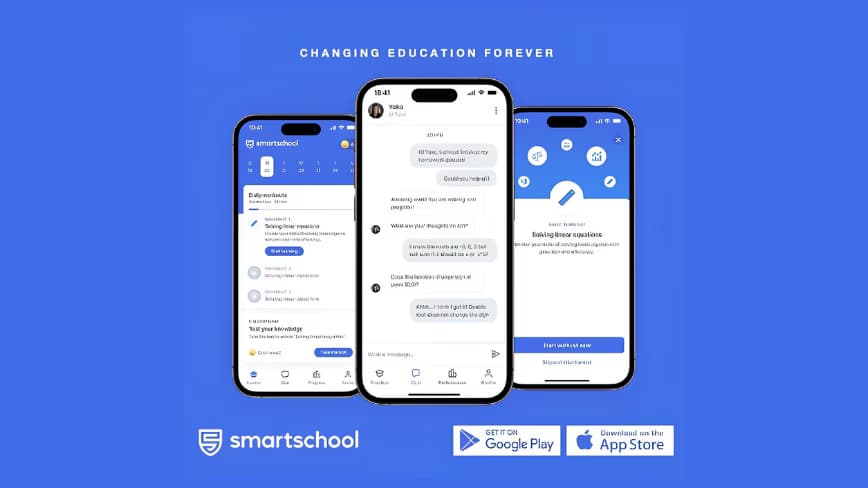
Artificial intelligence has proven that it can trawl the internet to retrieve information quickly for answering questions. But teaching students using AI is a harder task. The stakes are even higher when the goal is not just learning in school, but performing well on high-stakes exams like the SAT a
Key Insights
10 editorial insights.
Smartschool's recent initiative to develop AI specifically for educational purposes, rather than traditional chatbots, marks a significant shift in the approach to learning technology. This strategy aims to enhance the quality of education by focusing on tailored learning experiences, which could improve student performance on critical assessments such as the SAT.
Key players in this space, including Smartschool alongside established educational technology companies like Khan Academy and Coursera, play vital roles in shaping the future of AI in education. Their expertise and existing user bases provide a competitive edge, enabling them to innovate rapidly and meet the growing demand for effective learning solutions.
This development is strategically important as it signifies a move towards more sophisticated AI applications in education, which can personalize learning experiences. By prioritizing educational outcomes over generic chatbot functionality, Smartschool positions itself at the forefront of a market that values tailored learning, potentially attracting more institutional partnerships.
The introduction of Smartschool's AI could have a substantial business impact, particularly by enhancing user engagement and satisfaction. If successful, this could lead to increased subscriptions and a broader user base, as students and educators seek tools that genuinely support academic success, particularly in high-stakes testing environments.
Over the past 12-24 months, there has been a growing trend towards the integration of AI in educational tools, with the global EdTech market projected to reach $404 billion by 2025, growing at a CAGR of 16.3%. Smartschool's focus on AI for education reflects this trend, as companies increasingly invest in technologies that enhance learning outcomes.
Quantitatively, the shift towards AI in education is underscored by a projected market growth, with the AI in education sector expected to reach approximately $6 billion by 2027. This growth illustrates a burgeoning demand for innovative educational solutions that leverage AI to improve personalized learning and assessment preparation.
However, this approach presents challenges, such as ensuring the AI can adequately understand and adapt to diverse learning styles and needs. There are also concerns regarding data privacy and the ethical implications of using AI in educational settings, which must be addressed to gain widespread acceptance.
Competitors like Google, with its Google Classroom platform, and Microsoft, through its educational tools, are likely to respond by enhancing their AI capabilities or developing similar educational-focused AI tools. This competitive pressure could spur innovation and lead to a faster evolution of educational technologies across the industry.
In the next 6-12 months, watch for regulatory developments regarding AI in education, particularly concerning data protection laws such as FERPA in the U.S. and GDPR in Europe. These regulations could significantly impact how education technologies are developed and implemented, affecting companies like Smartschool and their ability to scale.
For technology professionals and investors, the significance of Smartschool's strategy lies in its potential to redefine educational outcomes and create new market opportunities. Understanding the intersection of AI and education will be crucial for capitalizing on emerging trends, making this an area ripe for investment and innovation.
Smartschool's recent strategy underscores the challenges of implementing AI in education, particularly in comparison to chatbots. As AI technology advances, its application in teaching is crucial, especially for high-stakes exams like the SAT. This shift is significant for stakeholders in the education sector, as it indicates a growing recognition of the limitations of AI in personalized learning.
The technical underpinnings of Smartschool's approach to AI in education involve sophisticated algorithms capable of processing vast datasets to enhance learning outcomes. Unlike traditional chatbots, which primarily provide information, Smartschool's AI aims to create adaptive learning experiences tailored to individual student needs. This involves utilizing machine learning techniques to analyze student performance and adjust instructional content dynamically, fostering deeper engagement with the material.
In the broader context of the education technology market, companies are increasingly investing in AI-driven solutions for personalized learning. While chatbots serve as effective tools for basic inquiries, the demand for comprehensive educational AI systems is rising. Recent data shows a surge in funding for EdTech startups, with a notable increase in interest from venture capitalists in AI-enhanced learning platforms that promise improved student outcomes and engagement.
Within India’s tech ecosystem, startups like Byju's and Unacademy are at the forefront of integrating AI into educational tools. As the Indian government pushes for digital education initiatives, the adoption of AI in learning platforms could revolutionize the way students prepare for competitive exams. This trend may lead to a more personalized approach to education, catering specifically to the needs of Indian students navigating rigorous academic environments.
Key Highlights
- Smartschool unveils an AI-driven personalized learning strategy.
- Utilizes machine learning algorithms for adaptive educational experiences.
- The EdTech market sees a 40% increase in AI investment in 2023.
- Students preparing for competitive exams stand to gain the most.
- Expect more AI-integrated educational tools to emerge in 2024.
Real-World Impact
The immediate effects of Smartschool's strategy will be felt across various educational roles, including teachers, curriculum developers, and EdTech entrepreneurs. As AI tools become more prevalent, educators will need to adapt their teaching methodologies to incorporate these technologies effectively, leading to a shift in how educational support services are delivered.
Why This Matters
This development signifies a critical transition towards more personalized education, challenging traditional teaching models. CTOs and developers should prioritize the integration of AI capabilities within educational products to remain competitive and meet the evolving needs of learners. The focus should shift towards creating more holistic learning environments that leverage data to improve outcomes.
Looking ahead, the evolution of AI in education will be pivotal in reshaping learning experiences. Stakeholders should closely monitor how emerging technologies will further influence educational methodologies and student success rates in the coming years.
Found this useful? Share it!